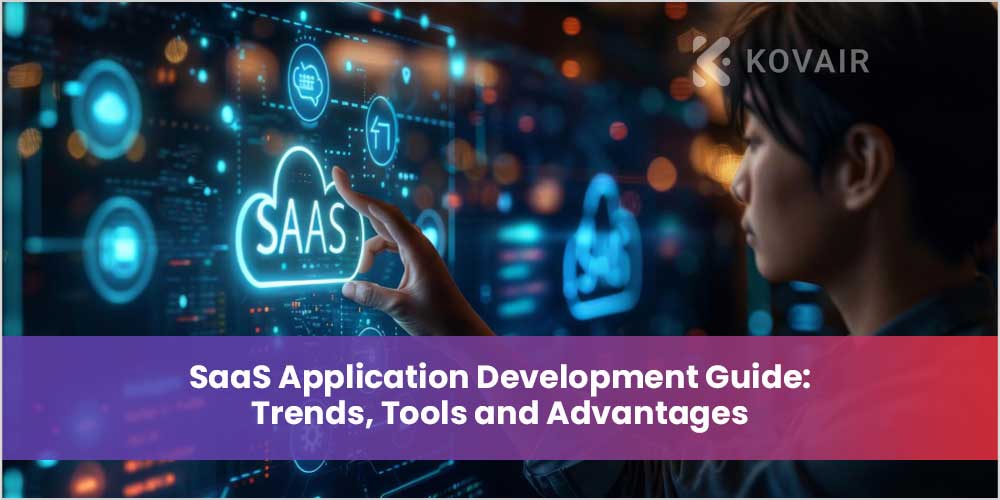
Want to develop a SaaS application that aces the market but don’t know what trends to follow? Or are you looking for the tools that streamline your SaaS development and launch? Or want to know the benefits of developing a SaaS app? Or are you looking for the complete SaaS guide? No need to worry, here we have created a detailed guide that will answer all your questions. Let’s explore.
Top SaaS Trends You Should Have Your Eyes On
To take your business to the next level in this highly competitive SaaS market, you need to follow some of the most important trends. Here we have listed them. Time to check them out.
Micro SaaS
Micro SaaS is all about proving a point that scaling does not require breadth. They are focused on solving one problem of a very specific and niche audience. Developing a Micro SaaS with minimal teams and infrastructure only.
This trend is something that provides SaaS leaders a path that leads to speed, resilience, and profitability in a market where customers prioritize simplicity over platforms.
Low-Code/No-Code SaaS
Many organizations have developed the wrong opinion about low-code and no-code SaaS, which will replace developers. But as we said, it is completely wrong; this trend is more about how organizations will redistribute power inside organizations. This low-code SaaS trend allows customers to configure, extend, and even develop on top of SaaS products.
With Low-code and no-code, the dependency on your roadmap is reduced while increasing stickiness. SaaS focused businesses experience faster adoption, lower churn, and higher expansion revenue with this trend.
AI-Native Autonomous SaaS
AI is transforming SaaS in more ways than we can think of, and that is one of the major reasons why it is among the top SaaS trends of 2026. With AI-native autonomous SaaS, there’s a structural shift in the way software creates value. These products take the responsibility of execution on themselves, instead of relying on humans.
This unlocks vivid and massive margin expansion opportunities for SaaS leaders. It has changed the way customers evaluate return on investment, depending on the results delivered and not the features used. .
AI-First and Composable SaaS
We are in the era where SaaS is not just a destination, but an infrastructure and all the credit goes to AI-first and composable SaaS. This trend comes out to be the most valuable in a market segment where customers look for customization, flexibility, and interoperability and not just some all-in-one solutions.
Composability plays a crucial role in increasing ecosystem reach, long-term defensibility, and enterprise adoption by integrating your SaaS solutions into the mission-critical systems. The best way to follow this trend is by designing APIs before UI features, treating documents as a product asset, and enabling customers to assemble features as they want.
What we mentioned are some of the most important trends that you should follow. Ahead, there are some more trends that you can follow as per your requirements.
- API-Less Intelligent Integrations
- Outcome-Based and Agentic SaaS
- Vertical and Hyper-Specialized SaaS
- Sustainable and Responsible SaaS
- Predictive and Prescriptive Intelligence
- Security-First SaaS Architecture
SaaS Application Development Tools
When you choose the right SaaS development tools, you have already done half of the work. Below, we have mentioned some of the most impactful tools for SaaS application development that will help you streamline your development.
Cloud Platforms
- Amazon Web Services (AWS)
- Microsoft Azure
- Google Cloud Platform (GCP)
These platforms provide the infrastructure you need for deploying your SaaS application. Additionally, you get services like networking, databases, storage, computing, and more, which allows you to focus on functionality and not on underlying hardware.
Programming Languages
- JavaScript
- Python
- Java
- Ruby
- PHP
The selection of the programming language depends on your development team’s expertise and the application’s requirements.
Database Systems
SQL
- MySQL
- PostgreSQL
NoSQL
- MongoDB
- Cassandra
Both SQL and NoSQL support high availability and scalability, which is crucial for SaaS performance. What databases will suit you the most depends on your application’s data structure requirements.
Integrated Development Environments (IDEs)
- Visual Studio Code
- IntelliJ IDEA
- Eclipse
These integrated development environments provide powerful debugging and code editing features. They support a wide range of plugins and extensions that improve productivity and enable seamless development workflows.
Version Control Systems
- Git
- GitHun
- GitLab
These version control systems allow developers to track and manage changes in code, facilitating collaboration and handling version control for small, medium, and large teams effectively.
Automation Tools
- Jenkins
- CircleCI
- Travis CI
These automation tools play a crucial role in continuous integration and continuous deployment processes as they help you in automating building, testing, and deployment, which enhances efficiency and reduces error rates.
User Interface Design
- Adobe XD
- Sketch
- Figma
Above, we have mentioned some of the most commonly used design tools used for creating attractive and intuitive user interfaces. A good UI boosts user satisfaction and retention rates.
Front-End Frameworks
- React
- Angular
- Vue.js
These front-end frameworks allow developers to create a responsive and dynamic user interface for your SaaS application. It simplifies complex application development by providing reusable components and effective state management.
Security
- OWASP ZAP
- Burp Suite
SaaS applications store sensitive data, which makes security the highest priority during development. You need to follow some essential practices such as encrypting data in transit, implementing strong authentication mechanisms, and performing regular vulnerability assessments.
Monitoring and Analytics
- New Relic
- Datadog
- Prometheus
These monitoring tools enable developers to track their SaaS application performance and identify issues in real-time.
- Google Analytics
You get valuable insights related to user behavior, which will assist you in making data-driven decisions, ultimately improving the customer experience.
Advantages of SaaS Application
Welcome to the final chapter of our detailed SaaS application development guide. What advantages will you or your customers get from SaaS applications? This is exactly what we have answered in this section. Explore it to solve your question.
Reduced Time to Benefit
The difference between SaaS and the traditional model is that SaaS is already installed and configured. All you need to do is provision it for the cloud, and there is your ready-to-use application. It reduces the time you spend on installation and configuration, reducing the issues that emerge during installation.
Lower Costs
We already know that having on-premises solutions requires license fees that will be paid by the user. However, with SaaS applications, you can help your customers avoid such expenses as they provide subscription-based models. They can also adjust their subscription fees depending on the metrics like no. of users, features, data storage, and more.
Recurring Revenue
SaaS subscription-based model facilitates business for generating recurring revenue from the users on a yearly or monthly basis. Once the business acquires a stable number of subscribers, the revenue also becomes stable, which makes it easier for the business to manage cash flow, as now they only need to analyze the number of active subscriptions and users.
Reduced Churn Rates
The SaaS subscription model offers the opportunity for continuous revenue, making users subscribe to the model over time and again. As SaaS applications can be accessed remotely, unlike traditional software, users choose them over others.
Scalability and Integration
The best part about SaaS applications is that they reside in cloud environments that are integrated with other SaaS offerings and are scalable. You do not need to buy additional servers or software to scale seamlessly, but only a new SaaS offering with expansion plans.
Final Thoughts
When you are developing a SaaS application, you need to have a complete understanding of existing and emerging trends, tools and technologies. It helps you make sure what you develop meets what you wanted to develop and that SaaS solves real-world problems. For reliable SaaS application development, you need to partner with the right developers who understand your core objectives.

Mila Rowe

Mila Rowe is a technology writer passionate about digital transformation, AI, and enterprise innovation. She simplifies complex ideas into actionable insights for modern businesses.