
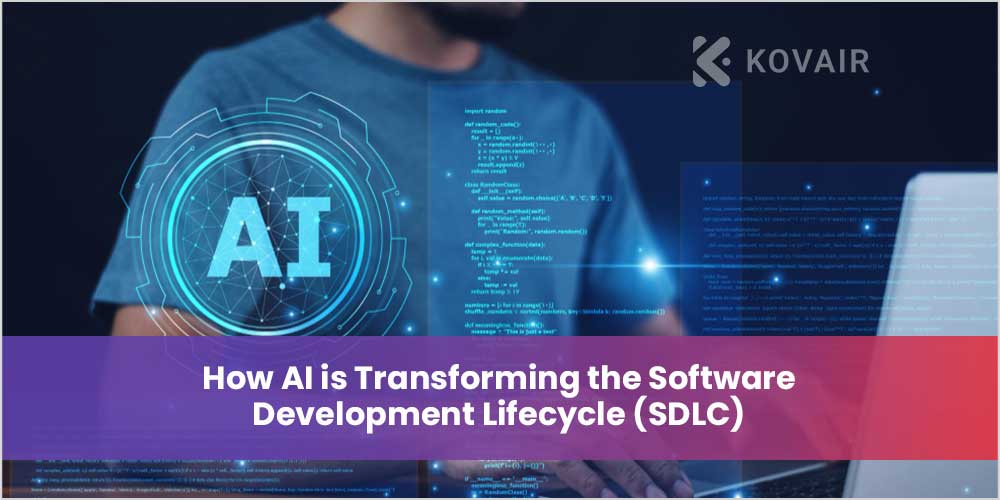
Artificial Intelligence (AI) has rapidly evolved from an experimental technology into a core business enabler. Today, it influences nearly every industry from finance and healthcare to marketing, logistics, and manufacturing. One area experiencing particularly profound change is the Software Development Lifecycle (SDLC).
Software development has traditionally required significant manual effort, extensive testing cycles, constant maintenance, and ongoing collaboration between multiple teams. While these processes ensured quality, they often slowed down innovation and increased operational costs. AI is now reshaping this landscape by introducing automation, predictive analytics, intelligent decision-making, and enhanced productivity across every stage of software development.
Organizations that integrate AI into their development workflows are seeing faster releases, improved software quality, reduced costs, and enhanced customer satisfaction. Understanding how AI impacts each phase of the SDLC can help businesses adopt smarter development strategies and stay competitive in an increasingly digital world.
Let’s explore how AI is transforming every stage of software development from planning to post-launch maintenance and what it means for the future.
AI in Planning and Requirement Analysis
The planning phase lays the groundwork for any software project. Traditionally, requirement gathering involved stakeholder interviews, documentation reviews, market research, and manual analysis. While effective, this process often introduced delays and potential misunderstandings.
AI is transforming this phase through intelligent data analysis and automation.
AI-powered analytics tools can analyze customer feedback, market trends, competitor strategies, and historical project data. This helps businesses identify what users actually need rather than relying purely on assumptions. Machine learning models can detect patterns in user behavior, allowing teams to predict feature demand and prioritize development accordingly.
Natural Language Processing (NLP) tools also help extract requirements from emails, customer support tickets, meeting transcripts, and online reviews. This reduces manual documentation work and ensures no critical insights are missed.
The benefits include:
- More accurate requirement gathering
- Faster decision-making
- Reduced communication gaps
- Data-driven feature prioritization
This leads to better project alignment and fewer costly changes later in development.
AI-Driven Software Design and Architecture
Software design involves creating the blueprint of an application, including system architecture, user interface design, workflows, and performance optimization strategies. A poorly designed architecture can cause scalability issues, security vulnerabilities, and performance bottlenecks.
AI assists designers and architects by providing intelligent recommendations based on previous successful projects and real-world performance data.
For example, AI tools can:
- Suggest optimal architecture patterns
- Identify potential scalability challenges
- Recommend UI/UX improvements
- Simulate user interaction scenarios
- Optimize database structures
UI/UX designers benefit greatly from AI insights. Predictive analytics can analyze how users interact with similar apps and recommend design elements that improve engagement.
AI-powered design automation also accelerates prototyping. Instead of manually creating every wireframe, designers can generate layouts quickly and refine them based on AI recommendations.
This results in:
- Faster design cycles
- Better user experience
- Improved performance planning
- Reduced design errors
Ultimately, AI helps ensure applications are built on strong architectural foundations.
AI-Powered Coding and Development
Perhaps the most noticeable impact of AI in SDLC is in the development phase itself. AI coding assistants are revolutionizing how developers write and optimize code.
These tools analyze massive datasets of code repositories to learn best practices, coding patterns, and optimization techniques. Developers can now receive real-time suggestions while writing code.
Key capabilities include:
- Automated code completion
- Bug detection during coding
- Code refactoring suggestions
- Boilerplate code generation
- Documentation automation
- Code translation between languages
This significantly improves developer productivity. Routine coding tasks become faster, allowing developers to focus on complex logic, innovation, and problem-solving.
AI also enhances collaboration by maintaining consistent coding standards across teams. It helps reduce technical debt and improves long-term maintainability.
However, AI doesn’t replace developers. Human creativity, problem-solving skills, and domain expertise remain essential. AI simply acts as a powerful assistant that amplifies developer capabilities.
Revolutionizing Software Testing With AI
Testing has historically been one of the most time-consuming aspects of software development. Manual testing requires repetitive effort, extensive documentation, and constant monitoring.
AI is transforming software testing in several powerful ways.
Intelligent Test Case Generation
AI tools automatically generate test cases by analyzing application behavior, code structure, and user interaction patterns. This ensures comprehensive testing coverage without excessive manual effort.
Predictive Defect Detection
Machine learning models analyze past defects and identify patterns that indicate where new bugs might appear. This allows teams to address issues proactively.
Adaptive Test Automation
Traditional automated testing scripts often break when UI changes occur. AI-driven testing tools adapt dynamically to interface changes, reducing maintenance overhead.
Visual Testing Improvements
AI can detect visual inconsistencies in UI design, ensuring a consistent user experience across devices.
The impact is significant:
- Faster testing cycles
- Reduced human error
- Improved software reliability
- Faster product releases
Organizations adopting AI testing often achieve higher quality standards while accelerating time-to-market.
AI in DevOps and Continuous Deployment
Deployment used to involve manual configuration, server management, and extensive monitoring. AI has transformed DevOps practices by introducing predictive analytics, automation, and intelligent monitoring.
AI-driven DevOps tools help:
- Automate deployment pipelines
- Predict infrastructure failures
- Optimize cloud resource allocation
- Monitor system performance in real time
- Identify performance bottlenecks
AI enhances Continuous Integration and Continuous Deployment (CI/CD) pipelines by automatically detecting issues during integration and suggesting fixes.
This leads to:
- Reduced downtime
- Faster release cycles
- Improved system reliability
- Better infrastructure management
AI also helps organizations implement self-healing systems that automatically resolve minor issues without human intervention.
AI in Maintenance and Post-Launch Optimization
Software maintenance is often overlooked but critically important. Applications require regular updates, security patches, performance optimization, and feature enhancements.
AI enables proactive maintenance strategies.
Instead of waiting for issues to occur, AI systems monitor application performance continuously and detect anomalies early. Predictive maintenance models analyze usage patterns and recommend updates before problems arise.
AI also helps analyze user behavior after launch. Businesses can identify which features users engage with most and optimize future updates accordingly.
Benefits include:
- Reduced operational costs
- Improved system stability
- Higher user satisfaction
- Continuous performance optimization
This ensures software remains relevant and competitive long after initial deployment.
Key Benefits of AI Across the SDLC
Integrating Artificial Intelligence throughout the Software Development Lifecycle (SDLC) is no longer just a competitive advantage; it’s quickly becoming a necessity for businesses that want to build faster, smarter, and more reliable software. AI introduces automation, predictive insights, and intelligent decision-making into development workflows, helping organizations reduce inefficiencies while improving overall product quality.
From initial planning and coding to testing, deployment, and long-term maintenance, AI contributes measurable value at every stage. Companies that successfully adopt AI-driven development practices often see improved productivity, faster time-to-market, enhanced security, and stronger user engagement. Let’s explore the key benefits in detail.
Faster Development Speed
One of the most immediate advantages of AI in the SDLC is increased development speed. Software development traditionally involves numerous repetitive tasks writing boilerplate code, documenting processes, testing manually, and troubleshooting recurring issues. AI-powered automation significantly reduces these manual efforts.
AI coding assistants can generate code suggestions in real time, automate documentation, and even identify bugs during development. Automated testing frameworks further accelerate release cycles by reducing the need for manual test execution.
This efficiency allows development teams to focus on innovation rather than routine work. Faster development doesn’t just mean quicker launches; it also enables companies to respond rapidly to market changes, customer feedback, and emerging business opportunities.
Ultimately, AI helps organizations shorten development cycles without compromising quality.
Higher Software Quality
Quality remains one of the biggest challenges in software development. Even small bugs can negatively impact user experience, brand reputation, and operational efficiency. AI plays a critical role in improving software quality through intelligent testing, predictive analytics, and automated code review.
AI-driven testing tools analyze large datasets to identify potential vulnerabilities before they become serious problems. Machine learning models can predict defect-prone areas of code, allowing developers to address risks proactively.
Additionally, AI code analysis tools enforce coding standards and suggest optimization techniques, resulting in cleaner, more maintainable codebases.
By minimizing human error and enhancing testing accuracy, AI helps deliver stable, reliable, and high-performing applications that meet user expectations.
Cost Optimization
Cost efficiency is a major consideration for any software development project. AI contributes to cost optimization by reducing manual labor, minimizing errors, and improving resource utilization.
Automation decreases the time developers spend on repetitive tasks, reducing overall development hours. Predictive maintenance powered by AI also helps organizations avoid costly downtime and unexpected system failures.
Moreover, AI-driven analytics help teams allocate resources more effectively. Instead of over-investing in unnecessary features or infrastructure, businesses can make data-driven decisions that maximize return on investment.
While implementing AI tools may require initial investment, the long-term savings from improved efficiency, reduced rework, and optimized processes often outweigh the upfront costs.
Enhanced Security
Cybersecurity is an increasing concern as software applications handle sensitive data and complex digital interactions. AI significantly strengthens security measures across the SDLC.
AI-powered security tools continuously monitor applications for unusual activity, detect vulnerabilities, and identify potential threats in real time. Machine learning algorithms can recognize patterns associated with cyberattacks, enabling proactive defense mechanisms.
During development, AI can analyze code for security flaws such as weak authentication protocols, data exposure risks, or compliance issues. This early detection reduces the likelihood of security breaches after deployment.
Enhanced security not only protects business data but also builds user trust, a critical factor in today’s digital landscape.
Better Decision-Making
AI provides development teams with actionable insights derived from data analysis. Instead of relying solely on intuition or past experiences, teams can make informed decisions based on real-world data.
AI analytics platforms can evaluate user behavior, system performance, market trends, and historical project outcomes. These insights help organizations prioritize features, allocate resources, and refine development strategies.
For example, AI can predict which features users are most likely to engage with, helping teams focus development efforts where they deliver maximum value. Similarly, predictive analytics can identify potential project risks early, allowing proactive mitigation.
Better decision-making leads to more efficient development cycles, reduced risks, and improved business outcomes.
Improved User Experience
User experience plays a crucial role in the success of any software application. AI enables developers to create more personalized, intuitive, and engaging digital experiences.
By analyzing user behavior, AI can identify preferences, usage patterns, and pain points. This data helps design teams optimize interfaces, improve navigation, and enhance overall usability.
AI-driven personalization features such as recommendations, adaptive interfaces, and intelligent chatbots make applications more responsive to individual user needs.
Additionally, AI helps ensure consistent performance across devices and environments, reducing frustration and increasing user satisfaction.
A better user experience often translates into higher customer retention, stronger brand loyalty, and increased revenue opportunities.
Real-World Applications of AI in Software Development
Many companies are already leveraging AI successfully in their development workflows.
Examples include:
- Automated code generation platforms
- AI-driven bug tracking systems
- Predictive DevOps monitoring
- Intelligent UI/UX optimization tools
- Chatbots assisting development support
These real-world implementations demonstrate AI’s growing importance.
The Future of AI in Software Development
AI’s role in software development will continue to expand. Future advancements may include:
- Autonomous development environments
- Fully automated testing frameworks
- Advanced predictive analytics
- AI-driven cybersecurity systems
- Hyper-personalized user experiences
Developers will increasingly focus on strategic thinking, creativity, and innovation while AI handles repetitive technical tasks.
This collaborative model between human intelligence and artificial intelligence will drive faster innovation.
Why Businesses Should Embrace AI in SDLC
Companies adopting AI-driven development gain significant competitive advantages.
They can:
- Launch products faster
- Reduce development costs
- Improve product quality
- Enhance customer satisfaction
- Scale operations efficiently
Ignoring AI adoption may result in slower innovation and reduced competitiveness.
Forward-thinking organizations are already integrating AI to future-proof their development processes.
Final Thoughts
Artificial Intelligence is fundamentally transforming the Software Development Lifecycle. From planning and design to coding, testing, deployment, and maintenance, AI enhances efficiency, improves quality, and enables smarter decision-making.
Rather than replacing developers, AI empowers them. It removes repetitive tasks, accelerates workflows, and allows developers to focus on creativity, innovation, and strategic problem-solving.
Businesses that embrace AI-driven development today position themselves for future success. As AI technology continues evolving, its influence on software development will only grow stronger, shaping the next generation of digital innovation.
The future of software development isn’t just automated, it’s intelligent.
And organizations that adapt early will lead the digital transformation era.

Mila Rowe

Mila Rowe is a technology writer passionate about digital transformation, AI, and enterprise innovation. She simplifies complex ideas into actionable insights for modern businesses.