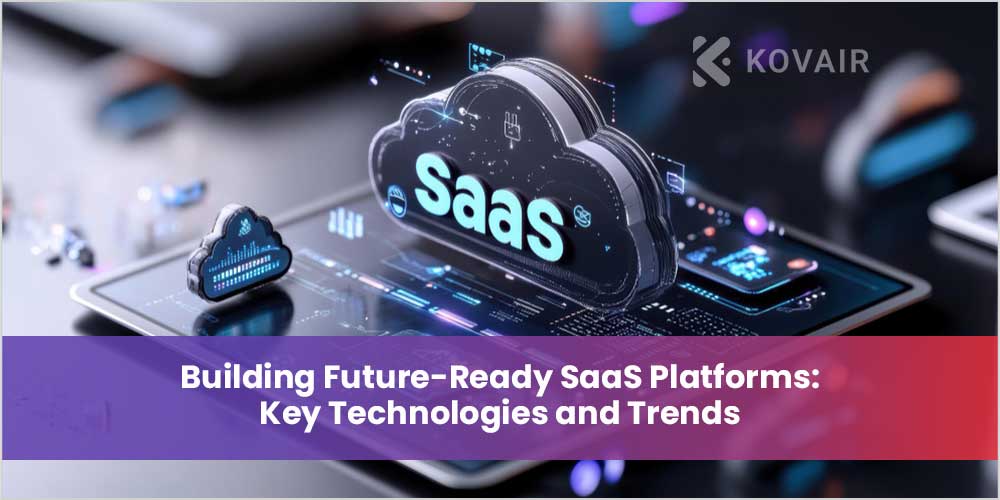
SaaS platforms are no longer just about delivering software over the cloud. In 2026, they are evolving into intelligent systems that can think, adapt, and act on behalf of users. Companies can now expect software to not only support their operations but also improve efficiency, reduce manual work, and provide real-time insights.
The biggest change will be from conventional SaaS to AI-native ecosystems. The reason is the speed at which AI is evolving, as well as the sheer amount of data and speed required. This means that, by 2026, there will be a point of no return when it comes to the evolution of SaaS solutions, meaning that they will evolve into an integral part of any business outcome.
Core Technologies Powering SaaS Platforms in 2026
Agentic AI & Multi-Agent Systems
SaaS platforms are moving beyond basic automation into systems that can independently handle difficult workflows. Rather than responding to single inputs, these AI agents can complete whole processes, like managing sales pipelines, resolving customer issues, or processing large datasets. Multiple agents can also work together, each focusing on a specific task, making operations faster and more efficient.
AI-Native Development Platforms
Modern SaaS platforms are developed with AI at their foundation rather than tools, cost monitoring systems, and safety guardrails. This setup allows teams to build, test, and deploy AI features quickly while maintaining control over quality and performance.
Vertical SaaS Specialization
One obvious thing is the move towards platform solutions specific to particular industries. The use of platforms that suit their specific industry – whether it is finance, health care, or construction – makes them much more useful than generic platforms.
Edge Computing for Real-Time SaaS
Speed and responsiveness are becoming important. Edge computing allows data to be processed where it is generated rather than sending it to centralized servers. This reduces latency and enables real-time decision-making, which is especially important for IoT systems, manufacturing, and analytics-heavy applications.
Confidential Computing & Secure-by-Design Systems
Security is evolving to handle more advanced threats. Confidential computing ensures that data remains protected even during processing, not just when it is stored or transferred. Combined with secure-by-design principles, this approach helps prevent breaches and builds trust with users handling sensitive information, especially in enterprise software development, where data sensitivity and compliance requirements are significantly higher.
API-First & Composable Architectures
By using APIs as the foundation, systems can be built as smaller and independent components that work together. This makes it easier to integrate with other tools, scale features, and update parts of the system without affecting the entire platform.
Low-Code / No-Code (LCNC) Platforms
Development is becoming more accessible across different teams. Low-code and no-code allow non-technical users to build websites and applications without any deeper programming knowledge. This speeds up innovation and reduces the dependency on dedicated development teams.
Key Trends Shaping the SaaS Landscape in 2026
Usage-Based & Hybrid Pricing Models
The pricing model for SaaS products has changed. Companies have started paying for the services they use, and also for their subscriptions as a base. This kind of pricing makes it easier for organizations to pay according to value received.
SaaS Superapps & Ecosystem Dominance
Users prefer fewer platforms that can do more. This has led to the rise of superapps that combine multiple tools into one ecosystem. At the same time, smaller SaaS products must either specialize deeply in a niche or integrate seamlessly into larger platforms to remain competitive.
Data-as-a-Service (DaaS)
Data is becoming a standalone offering. Rather than developing and maintaining complex data pipelines, companies can access clean, ready-to-use data on demand. This is especially valuable for AI-driven applications that depend on high-quality datasets.
Green SaaS & Sustainability
Impact on the environment is an important consideration when deciding on technology. Cloud computing providers are making use of energy-efficient infrastructure as well as carbon-neutral hosting and software solutions to monitor digital carbon footprints.
Mobile-First B2B SaaS Design
With more work happening on smartphones, SaaS platforms are being designed with a mobile-first approach. This means emphasizing simplicity, speed, and core functionality, allowing users to manage tasks efficiently from anywhere.
Strategic Framework: How to Build a Future-Ready SaaS Platform
Future Ready Platforms
Building a future-ready SaaS platform requires a clear strategy, not just the right tools. Companies investing in SaaS platform development must think beyond features and focus on long-term intelligence, scalability, and integration.
AI-first design
Designing an AI-first product strategy is the starting point. Companies need to identify where AI can deliver meaningful value and integrate it deeply into the product experience.
Choosing Architecture
Choosing the right architecture is also critical. Composable systems, built with modular components. They make it easier to scale and adapt as business needs evolve. Many companies rely on SaaS application development services at this stage to ensure the right technical foundation is in place.
Managing Cost
Cost management plays a huge role as well. AI infrastructure can quickly become expensive if not monitored. Businesses must track usage, optimize workloads, and make sure efficient resource utilization. This is especially important in custom SaaS development, where features are tailored, and resource usage can vary significantly.
Ecosystem Integration
SaaS solutions should be made with integration in mind. Integration with other applications will not only enhance the performance but also ensure a more satisfactory experience for users. It becomes essential when creating enterprise software applications that must work in harmony with one another.
Conclusion
The future of SaaS applications is being shaped by the convergence of data, AI, and flexible architectures. Platforms are becoming smarter, more connected, and responsive to user needs, reflecting broader SaaS industry trends in 2026. For organizations to remain competitive, there is a need for emphasis on AI integration into the core functions, timely value generation, proper security procedures, and flexibility in an ever-changing world. Effective strategies for developing the SaaS platform will be central to accomplishing this objective. In 2026, SaaS should not only be about the availability of software but also involve creating solutions that enhance productivity and growth.

Albert Hilton

Albert Hilton is a Marketing Head with over 7 years of experience driving growth for startups and enterprises. He specializes in aligning marketing strategies with custom software solutions to deliver measurable business results, enhance digital presence, and support scalable success.